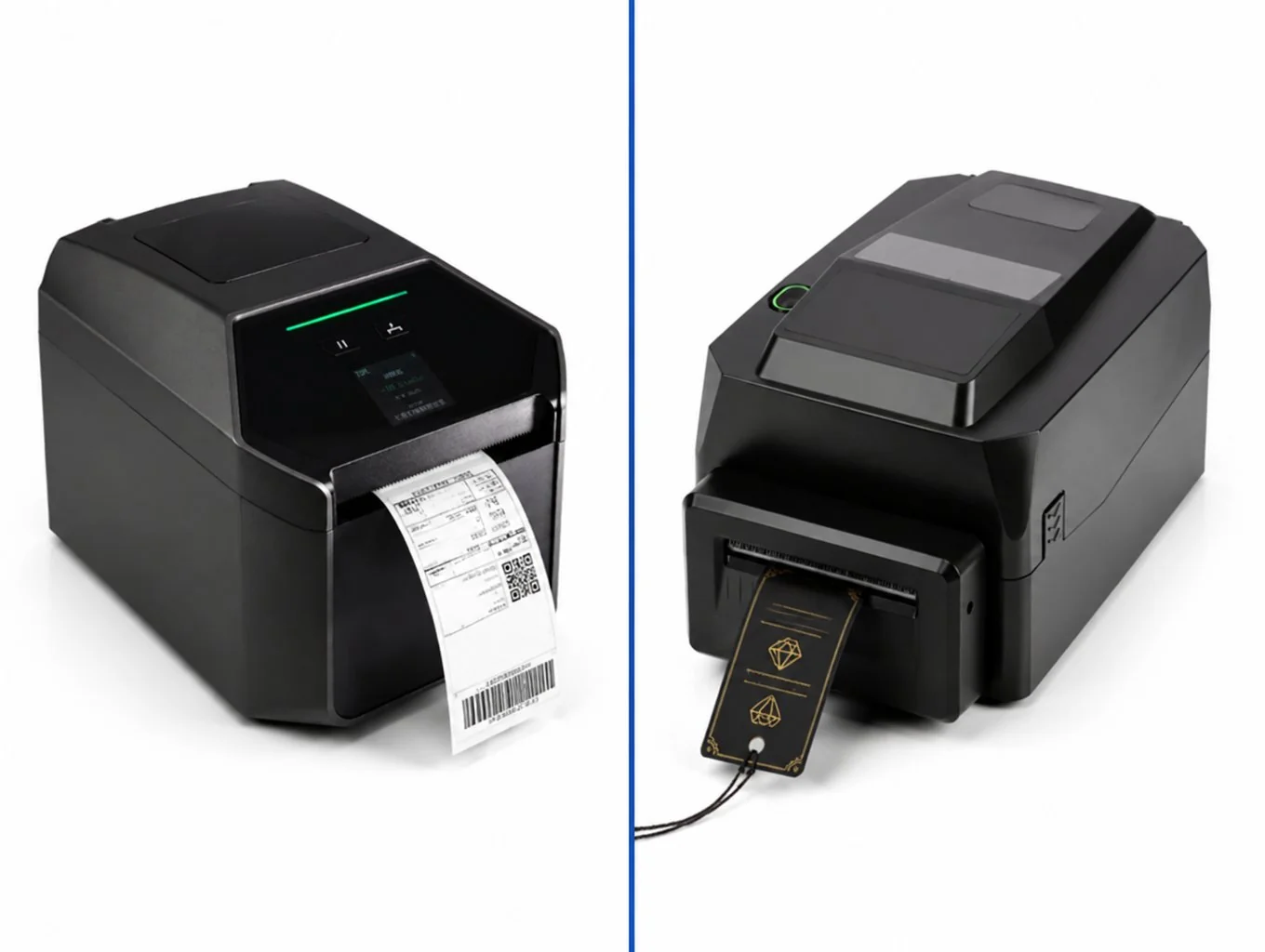
Thermal Printer vs Thermal Transfer Printer: Which One Should You Choose?

Guide August 21, 2026 🕑 5 min read
Thermal Printer vs Thermal Transfer Printer: Which One Should You Choose?

When people say "thermal printer," they usually mean direct thermal printing. But there's a close sibling called thermal transfer that works differently and lasts far longer. If you print labels, the choice between them decides whether your barcode still scans next month or next decade. Here's how to tell them apart.

How They Work

  • Thermal (Direct Thermal) Printer: A row of tiny heating elements heats the surface of specially coated thermal paper, triggering a chemical reaction that turns the heated spot black — just heat and coated paper, no ribbon involved.
  • Thermal Transfer Printer: Passes a dedicated carbon ribbon (ink-coated film) past a heated print head; the head melts the ribbon's ink coating and transfers it onto paper or other materials. The result is a durable, fused layer that won't fade, smudge, or wash away.

Head-to-Head Comparison

Feature Direct Thermal Thermal Transfer
Print MethodHeat activates coating on thermal paperHeated ribbon transfers ink onto media
ConsumablesThermal paper only (no ribbon)Ribbon + plain/synthetic label stock
Print DurabilityFades with heat, light, timeLong-lasting; resists solvent, abrasion, heat
Media SupportCoated thermal paper onlyPaper, polyester, nylon, fabric tags & more
ColorMonochrome (black)Monochrome (ribbon color)
Running CostLowest (no ribbon)Higher (ribbon consumed per print)
Best ForShort-term receipts, shipping labelsAsset tags, garment & product labels

When to Choose Direct Thermal

  • You print receipts, weigh labels, or short-life shipping labels
  • Your labels are scanned within days or weeks, not years
  • You want the lowest possible cost per label (no ribbon)
  • Prints stay indoors, away from heat and direct sunlight
  • You value simplicity — one consumable, fewer moving parts

When to Choose Thermal Transfer

  • You need labels that stay readable for years (asset tracking, compliance)
  • Labels face solvents, abrasion, moisture, or high temperatures
  • You print on synthetic, polyester, or fabric tag materials
  • Product, garment care, or jewelry tags must not fade or smear
  • You require crisp, permanent barcodes in harsh environments
💡 Pro Tip: A quick rule of thumb — if the label's job is "prove purchase today," use direct thermal; if its job is "identify this asset for life," use thermal transfer. Matching durability to shelf life saves money and re-prints.

📦 Related CRSMT Products

Direct thermal side: The S-U804 Thermal Receipt Printer and U80C POS Receipt Printer give you fast, low-cost thermal printing for receipts and short-term labels.

View S-U804 Specifications → View U80C Specifications →

Thermal transfer side: The S200, S300, and S600 thermal transfer label printers deliver durable, fade-proof tags for asset, garment, and jewelry applications.

View S200 Specifications → View S300 Specifications → View S600 Specifications →