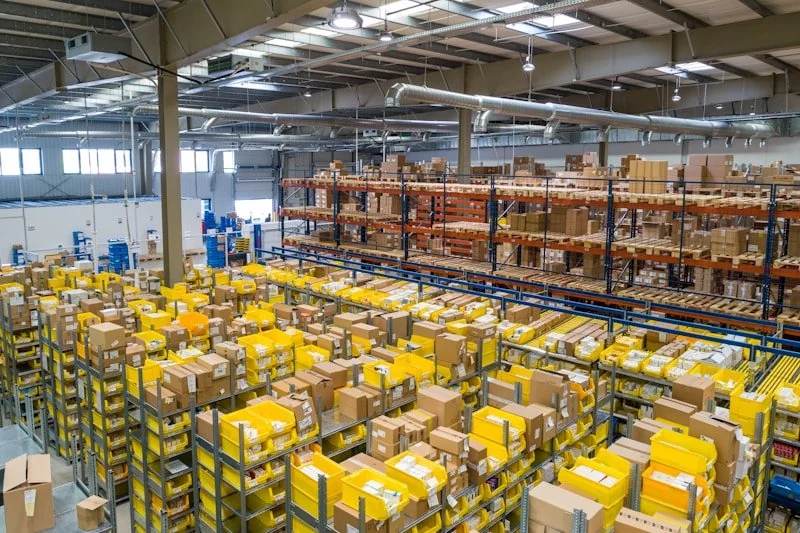
From retail inventory management to logistics tracking, healthcare asset management, and smart manufacturing, RFID (Radio Frequency Identification) technology is rapidly becoming the backbone of modern business operations. But what exactly is driving this shift, and why are more industries adopting RFID than ever before?
RFID uses electromagnetic radio waves to wirelessly identify and track tags attached to objects. Unlike barcodes that require line-of-sight scanning, RFID tags can be read from a distance — even through packaging, walls, or other obstacles. Each RFID tag contains a microchip and antenna that stores unique identification data, enabling automated, high-speed data collection without human intervention.
There are three main types of RFID systems:
Traditional barcode scanning requires an operator to point a scanner at each item individually. With RFID, hundreds of tags can be read simultaneously in seconds — a warehouse worker can count an entire pallet's worth of inventory with a single pass. This dramatically reduces labor costs and human error.
RFID enables real-time tracking of assets throughout the entire supply chain. From manufacturing to warehousing, shipping, and retail shelves, businesses can monitor the exact location and status of every item at any moment. This visibility is critical for just-in-time inventory management and demand forecasting.
Modern UHF RFID printers and readers support flexible frequency band switching — covering 865–868 MHz (EU), 902–928 MHz (North America), and 920–925 MHz (APAC). This means a single hardware device can be deployed seamlessly across different regions, enabling truly global supply chain tracking without compatibility issues.
RFID tag prices have dropped dramatically over the past decade, from over $1 per tag to just a few cents for basic labels. Combined with increasing chip functionality — with read/write buffers up to 512 bits — the cost-to-performance ratio has made RFID economically viable for mass-market applications.
RFID is a foundational technology for Industry 4.0 and the Internet of Things. It bridges the physical and digital worlds, enabling smart shelves, automated checkout systems, intelligent production lines, and connected supply chain networks.
The first step in adopting RFID is understanding your specific use case: What items will you tag? What's the reading distance requirement? What environment will the tags operate in (metal surfaces, liquid proximity, outdoor exposure)? These factors determine the tag type, chip selection, and printer specifications you'll need.
Ready to print your own RFID labels? The CRSMT SU200 RFID Label Printer is a reliable choice for UHF RFID tag printing in retail, warehouse, and logistics workflows. Explore the SU200 specifications and request a quote.
Explore SU200 RFID Label Printer →